Laser cladding equipment: The “super soldering pen” and “3D printer” for industrial parts
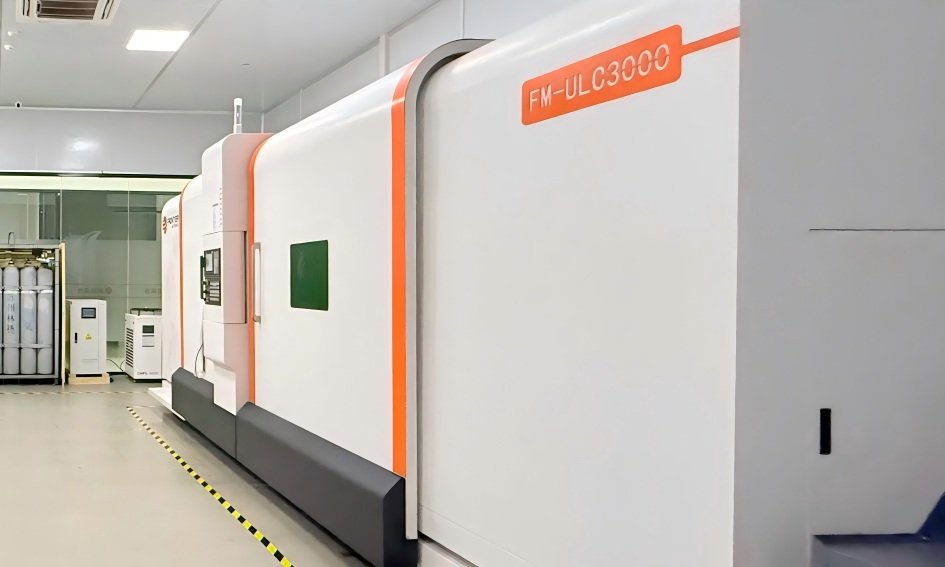
In modern industry, key components of large-scale mechanical equipment (such as rolls, gears, and turbine blades) often fail due to wear and corrosion. Direct replacement is costly, and traditional repair methods cannot guarantee performance. At this point, a technology known as “laser cladding” comes into play, and its core is the laser cladding equipment.
You can imagine it as a “super soldering pen” with magical power, or a 3D printer that can directly “draw” on the surface of metals.
What is laser cladding?
Laser cladding is an advanced surface modification technology. Its principle is not complicated: a high-energy-density laser beam is used as the heat source to form a small molten pool on the surface of the substrate (the part that needs to be treated or repaired). At the same time, specially formulated metal powder or wire (cladding material) is precisely fed into this molten pool. The powder melts instantly and metallurgically bonds with a thin layer of the substrate surface. As the laser beam moves, the molten pool quickly solidifies, ultimately forming a coating on the part surface that is of excellent performance and firmly bonded.
This process is like giving an old part a brand-new, custom-made “protective armor”.
How does the equipment work?
A complete laser cladding equipment is a highly integrated system, mainly composed of the following core parts:
1. Laser: The “heart” of the equipment, responsible for generating high-power laser beams. Common types include fiber lasers and CO₂ lasers.
2. Powder/ Wire feeding system: The “supply line” of the equipment, responsible for feeding the cladding material (powder or wire) at a precise and stable rate to the processing point.
3. Processing head: The “pen tip” of the equipment, which focuses the laser beam and guides the cladding material and protective gas (such as argon) precisely to the surface of the workpiece to prevent oxidation of the metal at high temperatures.
4. Motion control system: The “brain” and “arm” of the equipment, usually composed of a CNC machine or industrial robot, which controls the processing head or workpiece to move precisely along a preset path to complete complex-shaped cladding.
5. Cooling system: The “air conditioner” of the equipment, which cools down key components such as the laser and processing head to ensure the equipment operates stably for a long time.

Why is it so important?
Compared with traditional technologies, laser cladding equipment has significant advantages:
• Metallurgical bonding, high strength: The cladding layer and the substrate are atomically bonded, “you in me, me in you”, rather than simply physically adhered, thus the bonding strength is extremely high and it is not easy to fall off.
• Small thermal impact, minimal deformation: The laser energy is highly concentrated, with extremely fast heating and cooling rates, resulting in very little thermal impact on the entire part and almost no deformation.
• Customizable performance: Different cladding materials (such as nickel-based, cobalt-based alloys, or even composite materials like tungsten carbide) can be selected according to needs, endowing the part surface with specific properties such as wear resistance, corrosion resistance, and high-temperature resistance.
Wide applications:
o Repair and remanufacturing: Repairing worn or damaged high-value parts at a cost far lower than new ones, restoring or even surpassing their performance.
o Surface strengthening: Preparing a “protective armor” for new parts, significantly extending their service life in harsh conditions.
o 3D additive manufacturing: Directly manufacturing complex metal parts by layer-by-layer accumulation of metal powder.
In summary, laser cladding equipment is not only a “miracle cure” in the field of industrial maintenance but also a key technology in high-end manufacturing for enhancing product performance and achieving green remanufacturing, injecting powerful vitality into industrial development.