
A Comprehensive Understanding of Superalloys and Their Additive Manufacturing Technology
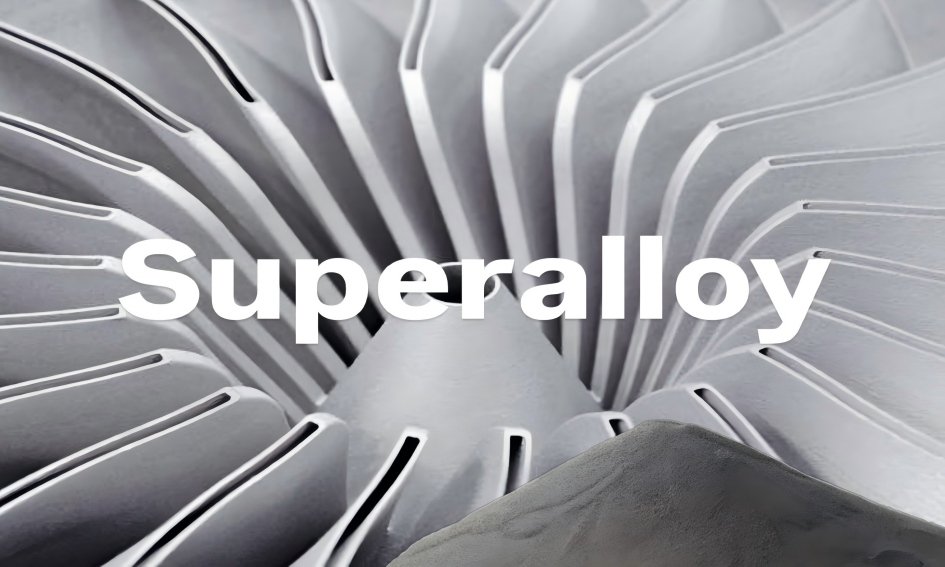
In many modern industrial fields, such as aerospace and energy power, superalloys play a crucial role. So, what exactly are superalloys?
Superalloys refer to a class of metallic materials that can operate for long periods at temperatures above 600°C under certain stress conditions. They possess excellent high-temperature strength, good oxidation and thermal corrosion resistance, good fatigue performance, fracture toughness and other comprehensive properties. Superalloys are mainly divided into three categories: iron-based, nickel-based and cobalt-based. Iron-based superalloys are generally used at temperatures below 700°C; nickel-based superalloys can work stably at around 1000°C and are the most widely used superalloys; cobalt-based superalloys have good thermal fatigue and thermal corrosion resistance and are often used in key components such as guide vanes of aero engines.
The traditional manufacturing processes of superalloys have some limitations, such as the difficulty in manufacturing complex parts, long production cycles and low material utilization rates. The emergence of additive manufacturing technology has brought about a new revolution in the processing of superalloys.
Additive manufacturing, commonly known as 3D printing, is a technology based on the principle of discrete – accumulation, driven by the three-dimensional data of parts, and manufacturing parts by layer-by-layer accumulation of materials. For the additive manufacturing of superalloys, common processes include laser powder bed fusion (LPBF) and electron beam powder bed fusion (E-PBF).
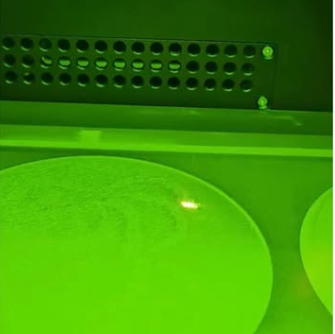
Laser powder bed fusion technology utilizes high-energy-density laser beams to selectively melt metal powders along pre-designed paths, layer by layer, to form three-dimensional solid parts. This technology can produce complex-shaped, high-precision high-temperature alloy parts, significantly shortening the product development cycle. For instance, in the manufacturing of aero engines, turbine blades with internal complex cooling channels can be directly printed, enhancing the thermal efficiency and performance of the engine.
Electron beam powder bed fusion technology, on the other hand, uses an electron beam as the heat source to melt metal powders. Compared with laser powder bed fusion, electron beam technology has a higher energy utilization rate and a faster heating speed, making it suitable for manufacturing large high-temperature alloy parts. Moreover, in the electron beam processing environment, the oxidation degree of metals is lower, which helps ensure the quality of the parts.
However, superalloy additive manufacturing also faces some challenges. Due to the rapid heating and cooling during the additive manufacturing process, residual stresses are prone to form inside the parts, causing deformation or even cracking. Additionally, the microstructure of additive manufactured parts differs from that of parts made by traditional processes, and their mechanical properties and long-term stability still require further in-depth research.
With the continuous advancement of technology, superalloy additive manufacturing technology is bound to be continuously improved and developed. It is expected to play a greater role in aerospace, energy, and other fields, driving these industries towards higher performance and lighter weight.