Exploring Metal Additive Manufacturing LPBF: The Magic of 3D Printing Metal
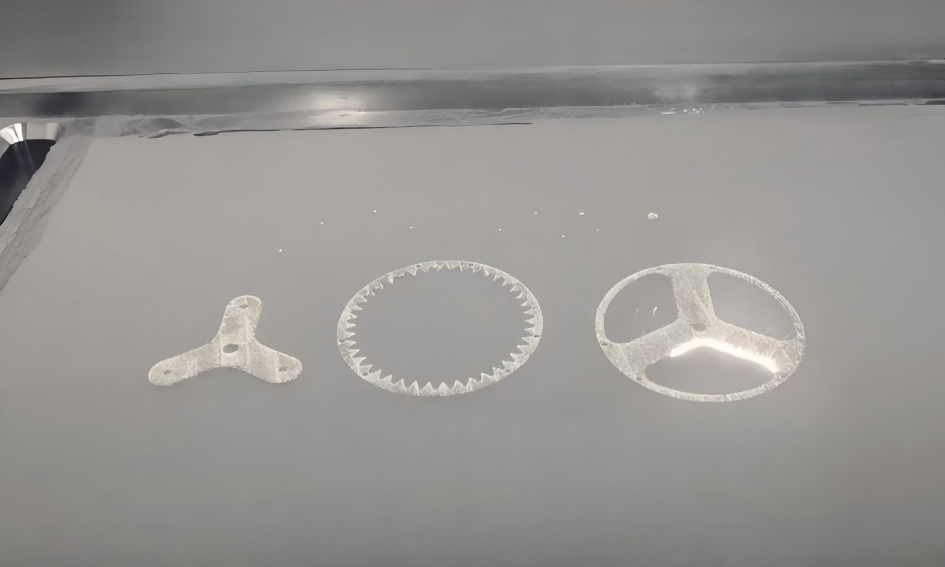
In today’s era of rapid technological advancement, 3D printing is no longer an unfamiliar term. From simple plastic trinkets to complex industrial components, 3D printing technology continues to expand our imagination. Among the various 3D printing technologies, the Laser Powder Bed Fusion (LPBF) technology for metal additive manufacturing is like a magical key, opening the door to a new world of metal component manufacturing for us.
What is LPBF Technology?
LPBF technology is essentially a 3D printing technology. It uses a high-energy laser beam to melt and solidify layers of metal powder according to a pre-designed 3D model, ultimately building a complete metal part.
The Working Principle of LPBF Technology
Preparation
First, engineers use Computer-Aided Design (CAD) software to create a 3D model of the metal part they want to manufacture. Then, the 3D model is sliced into a series of 2D cross-sections, each corresponding to the shape of the part at a certain height.
Powder Spreading Process
In an LPBF device, there is a dedicated powder bed. The device first spreads a very thin layer of metal powder on the powder bed, typically between 20 and 100 microns thick, which is a fraction of the diameter of a human hair. The powder spreading process is like evenly sprinkling a layer of flour on a table, except the “flour” here is metal powder.
Laser Scanning
After the powder is spread, a high-energy laser beam selectively scans the powder according to the 2D cross-section information. Wherever the laser beam hits, the metal powder rapidly absorbs the laser’s energy, the temperature rises sharply, reaching the melting point and melting. As the laser beam moves, the molten metal powder quickly cools and solidifies, forming a metal layer with the same shape as the 2D cross-section.
Repetitive Piling
After completing the laser scanning and solidification of one layer, the powder bed descends by the thickness of one layer, and the device spreads a new layer of metal powder. Then, the next layer’s laser scanning is carried out. This process is repeated layer by layer until the entire metal part is manufactured.
Advantages of LPBF Technology
Complex Structure Manufacturing
LPBF technology can easily produce metal parts with complex internal structures and fine shapes, such as aircraft engine blades with internal cooling channels and lightweight brackets with complex lattice structures. This provides a vast space for product design and innovation.
Personalized Customization
In some specialized fields, such as medical and aerospace, parts are often required to be manufactured according to individualized customer needs. LPBF technology can quickly produce customized metal parts based on different 3D models.
High Material Utilization Rate
Traditional processing methods usually manufacture parts by removing material, which generates a large amount of waste. LPBF technology, however, builds parts layer by layer and almost does not produce waste, with a material utilization rate of over 90%, significantly reducing production costs and resource waste.
。
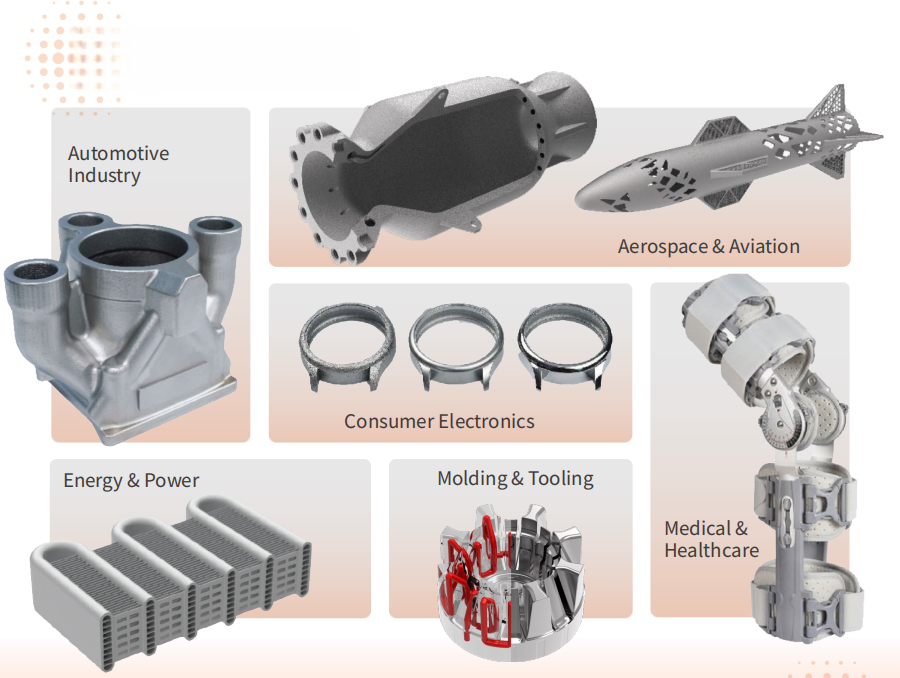
Application fields of LPBF technology
Aerospace
The aerospace industry has extremely high requirements for the performance and quality of parts, and also requires parts to be lightweight and have complex structures. LPBF technology can produce high-strength, low-density metal parts, such as turbine blades for aircraft engines and structural components for spacecraft, improving the performance and reliability of aerospace vehicles.
Medical
In the medical field, LPBF technology can manufacture personalized medical devices and implants, such as dental implants and orthopedic implants. These customized products can better match the patient’s body, improving treatment outcomes and patient comfort.
Automotive
The automotive industry has a continuous demand for lightweight and high-performance components. LPBF technology can produce complex-shaped automotive parts, such as engine blocks and suspension system components, reducing the weight of vehicles, improving fuel efficiency and power performance.
The LPBF technology of metal additive manufacturing is like a revolution in the manufacturing industry. It brings us unprecedented manufacturing capabilities and innovation space. Although there are still some challenges at present, it is believed that in the future, LPBF technology will be widely applied in more fields, bringing more surprises to our lives and industrial development.